

Fraud Information
The following frauds and scams are circulating within the town of Amherst and surrounding areas.
Reader's Digest Fraud
This fraud is known as an "advanced fee fraud." In this case, the fraudsters state that they are from "Reader's Digest." The letter makes the victim believe that they have won a sum of $826,000. The letter also includes a cheque for $8,000 payable to the victim which is supposed to cover insurance and administration fees. The victim deposits the cheque into their bank account and then is asked to wire the money to the fraudster via a wire transfer service such as Western Union or MoneyGram. Once the money is transferred the fraudsters disappear and the initial cheque is discovered to be counterfeit by the banks 5-7 days later.
pdf Reader's Digest Fraud(47 KB)
Microsoft/Apple/Intel Virus Phone Fraud
Individuals are calling people in the Amherst area and stating that they are from "Microsoft, Intel or Apple." They then inform the caller that there are malicious files on their computer and inform them to download some programs to remove the viruses or malware. In at least one instance the phone call originated from (253) 802-0308. The caller's voice is usually reported to be heavily accented and has been reported as male in most instances. Police believe that the fraudsters are attempting to install viruses or "key loggers" onto the victims' computers so that they can retrieve personal and banking information. APD is advising members of the public to immediately terminate the call if they are contacted by these individuals.
Fee Fraud
This type of fraud is commonly known as an advanced fee fraud. Advance fee frauds usually indicate that a wealthy stranger has died and asks for assistance with banking and moving a large amount of money involving the consumer's bank account. The fraud will then offer to give a percentage of the monies transferred. When a victim contacts the fraudsters, they ask for banking information and processing fees. Once the victim provides the advance fees, the fraudster takes the money and runs.
Grandparents Fraud
The victim received a phone call from someone alleging that they were their "grandson." The fraudster then stated that he was in an accident in Ontario and that the police arrested him for dangerous driving. The caller then passed the phone over to a person pretending to be a lawyer. This "lawyer" then explained that a large fine was required to avoid criminal charges against the grandchild. Both the grandson and the lawyer then requested monies be transferred via Western Union or MoneyGram. Typically, the fraudsters request that the grandparent keep the information confidential to avoid embarrassment for the grandchild. In the case that we received, the grandparent hung up at this point. It was also discovered that her grandson was safe and sound and had never in an accident. This fraud is commonly known as "emergency fraud," "grandparent fraud," or "It's me fraud." The fraud is known as "It's me fraud" because the fraudster will open the phone call by stating: "It's me, grandma." The senior will then usually state their grandson's or granddaughter's name, which now gives the fraudsters new information to continue with their fraud scheme. The public is advised to terminate the call if they receive this type of scam and to report the matter to our Department. Residents who live outside our jurisdiction are advised to contact their local police force.
Publishers Clearing House Fraud
Residents in our area are receiving letters from a company identifying itself as "Publishers Clearing House." The company further states that the mail recipient has won a cash reward of $958,000 USD. The letter further requests the mail recipient to call the company to arrange for the prize disbursement. The fraudster on the phone will then request banking information to be provided in order to release the prize. Sweepstakes scammers work hard to convince people that they have won a prize and one of the most common tactics is to disguise themselves as a legitimate company. According to the Publishers Clearing House website: "All prizes of $500 or greater are awarded by either certified or express letter or in person." It appears that Publishers Clearing House will not send out prizes via mail or phone and bulk mailing and phone calls appear to be the method of choice by most scammers.
Lower Interest Rate Scam
A female in the Amherst area reported being called by a company that offered to lower the interest rate on her credit card. The female was charged $395 USD for this service. The fraudsters then attempted a second call to her where they offered her a business opportunity of franchising. This "opportunity" would have the victim call up other victims and offer to lower the interest rates on their cards. The scam artists offered over $10,000 for the work. In the end, the female victim was defrauded of over $400 and did not receive what was promised. The public is advised that if they wished to lower their interest rates, they should self-initiate the call to the bank or from the number on their card. Very rarely would you have a situation where a legit solicitor would be working for all the different credit card agencies. Research any deal and do not get pressured into making a decision quickly on the phone.
Reader's Digest Fraud
This fraud is another scam using the Reader's Digest name. The scammer states that the person has won over two million dollars. When the prize recipient calls the number, the scammer requests prize fees to be transferred to them through a money transfer system like MoneyGram or Western Union. This is popularly known as advanced fee fraud.
pdf Readers Digest Fraud(67 KB)
Kijiji Scam
An Amherst resident was selling a sofa on the popular buy/sell website Kijiji. They received an email from a female who stated that she was hearing impaired that she lives on the border and that she was buying the furniture for a friend in the U.S.A. The email stated that she could not use the phone. The scammer then requests that they send a cheque for the product. The cheque most likely would have been counterfeit and the victim would have sent the product or had been instructed to forward excess fees to the scammer. This scam is very popular on Kijiji. Typically, the fraudster will say that they can only communicate through email (i.e. out at sea, living in remote regions etc.). Police are recommending that when residents are selling or buying items from Kijiji they avoid money transfers and cheques. Cash is probably the safest bet. Residents should also be wary when dealing with international or foreign buyers who will use "a middleman" to facilitate the sale.
Inheritance Letter Scam
A victim receives a request via letter stating that a very wealthy stranger has died. The letter, which claims to be written by a lawyer stresses the urgency and confidentiality of the transaction, and the importance of trust and honesty (to make the victim believe that the letter is valid). The letter writer asks for assistance with banking and moving a large amount of money involving the victim's bank account and asks the victim to share in the wealth. The victim is offered a significant percentage of the amount for simply providing his/her bank details. Once the victim contacts the scammer, the scammer will normally ask for processing fees etc. The victim provides the fees to the scammer and never gets any portion of the fictional inheritance.
National Lottery Fraud
This is another example of an advance fee fraud. The fraud claims to be affiliated with several phone companies and shopping centres. The fraudsters state that the recipient has won a total of $51,950 and encloses a cheque for $1,650 for "administration fees." The letter urges the letter recipient to cash the cheque and send the $1,650 to them via Western Union or MoneyGram. Once the recipient sends the money, they never hear from the fraudsters again and 7-10 days later, the cheque that they initially deposited into their bank accounts ends up counterfeit. A couple of things in this letter help show a pattern in most advance fee frauds. The fraudsters will usually use a money transfer system. The fraudsters also request that you always keep the correspondence confidential so that the victim does not get persuaded out of participating in the fraud. The fraudsters tend to state that their "contest" is affiliated with a whole slew of businesses who normally do not associate with one another. Lastly, these frauds tend to have foreign phone numbers attached to them.
pdf National Lottery Fraud(48 KB)
Florida Rental Scam
This fraud is circulating on Kijiji and what the scammers attempt to do is fraudulently rent breach front houses in Florida. In this case, the victim had the sense to do some back-checking and discovered that the scammers were not the owners of the property. Typically, the scammers will ask for an up-to-date rental fee to be prepaid to them and in this case, they wanted the monies transferred via PayPal. Reading through the emails from the victim and the fraudster there are some telltale signs that this is a scam. The emails used are all generic Hotmail or Live accounts. The "seller's" writing is poor and indicates that the fraudster is possibly foreign. The "seller" indicates that they are far away (Geneva) and therefore cannot respond except through email. The ad is renting the property for a fraction of the going rate. The "seller" states "It's not all about the money, but giving privileges to people to enjoy and have the best list can offer." Dead giveaway.
pdf Florida Rental Scam(422 KB)
Email Fraud
Email fraud is when the fraudster is attempting to get personal information from the victim. The suspect will, probably afterwards, contact the victim and attempt to solicit money in "interest fees" or "taxes" for the prize.
Canada Revenue Agency
This is a common scam that could result in identity and financial theft. The Canada Revenue Agency would never ask for credit card, bank account or passport numbers in an email. Residents should not click on any links in an email as it could contain embedded malicious software or it may redirect the user to a fraudulent webpage where the scammer will ask for personal information. These emails often have the Canada Revenue Agency logos on them in an attempt to make them look legit. A common giveaway is that many of these emails have numerous grammatical or spelling mistakes. Here is additional information from the CRA about scams involving their organization.
Community Policing
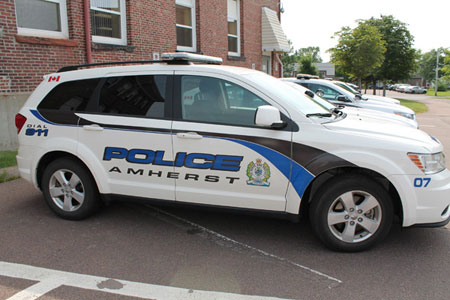
The Police Department, through its officers, has participated in community efforts since its inception. With the commitment to the community-based policing philosophy identified in its strategic plan, it has taken a more structured approach to community/police partnering to resolve community issues.
The department has liaison officers actively participating with the community in a number of national as well as local programs.
Cops for Kids

pdf 2023 Cops for Kids Registration Form(202 KB)
Once the form is filled out, fax it to 902-667-0268 or drop it off at the front counter of the Amherst Police Department.
C4K will run July 17th - 21st for ages 12-13 years. Deadline for applications is July 2nd. For more information, please contact Cst Michelle Harrison or Melanie Siddall at 902-667-7227.

Reporting a Crime
The Amherst Police Department appreciates the assistance of the public in keeping our community safe.
EMERGENCIES – Call 911
It is an emergency if life or property is at immediate risk, or if an incident is in progress. “In-progress” means that the situation is currently ongoing, or a suspect may still be in the immediate area, and/or victims are still in harm's way.
By Phone – NON-EMERGENCY
Non-emergency dispatch line: 902-667-8600
This number is staffed 24 hours a day 7 days a week.
Call this number if you have a non-emergency incident but you may need an officer to come to the scene.
In Person
You can file a report any time at the Amherst Police Department office which is situated at 21 Havelock Street, Amherst, NS.
We are open 24 hrs a day 7 days a week.
Anonymous Tip – Crime Stoppers
If you have information about a crime and would prefer to remain anonymous, call Crime Stoppers toll-free at 1-800-222-TIPS (8477) or submit a secure web tip at Nova Scotia Crime Stoppers.
Cybertip.ca – Canada’s tipline to report the online sexual exploitation of children
Operated by the Canadian Centre for Child Protection, Cybertip.ca’s mandate is to protect children from online sexual exploitation by:
- Receiving and processing tips from the public about potentially illegal material, as well as activities regarding the online sexual exploitation of children, and referring any relevant leads to the appropriate law enforcement agency and/or child welfare agency; and,
- Providing the public with information and other resources, as well as support and referral services, to help Canadians keep themselves and their families safe while using the Internet.
Board of Commissioners

The Amherst Board of Police Commissioners is the civilian body to which the Amherst Police Department is accountable. The Commission is a statutory body created by the Police Act of Nova Scotia and the Town of Amherst Bylaw to Establish the Amherst Board of Police Commissioners to oversee policing in the Town. Amherst Town Council appoints six members of the Police Commission, three council members and three civilian appointees. The Nova Scotia Minister of Justice appoints one representative to the Amherst Board of Police Commissioners.
The Police Commission is a link between the community and the police with a mandate to balance the requirements of public accountability with those of police independence. The Commission acts as a conduit between the police and elected officials. The Commission’s authority for the general accountability of the Amherst Police Department derives from the Police Act of Nova Scotia and the Town of Amherst Bylaw to Establish the Amherst Board of Police Commissioners. The members of the Police Commission make decisions and issue instructions as a statutory body, in writing, through the Chair.
Under the Police Act, Amherst Town Council is responsible for appointing the Chief of Police. The Commission establishes policing priorities and policies and annually recommends a capital and operational budget to Town Council. The Police Commission issues directions to the Police Service through the Chief of Police and those instructions must be consistent with the statutory duties and responsibilities of the Chief of Police under the Police Act. The Chief of Police is responsible for the day-to-day operations of the Police Service.
The Police Act preserves the Chief’s independence to: uphold the law; provide police service to the community; and manage the police service. The Act makes the Chief accountable to the Commission for the operation of the police service, the manner in which the Chief’s responsibilities are carried out and the administration of finances.
Board Mandate
- Prevent political interference;
- Ethical Policing;
- Build public confidence and trust;
- Represent the voice of the community; and,
- Establish policies for effective and efficient policing.

History of APD

The Amherst Police Department was formed in 1890, just one year after the town of Amherst was incorporated and the population was 3,781. The first Chief of Police Dennis Madden was paid $391.51 for his first 11 months of service to the town, while his partner and Constable A.L. Jones was paid $366.63.
For a brief period in 1897, the Police Department was reduced to only one person: Chief Madden. The town counsel decided that in a law-abiding community such as Amherst, there was little need for more than one police officer. Most incidents that police dealt with were reportedly ‘intoxicated strangers’ and ‘tramps’ caught riding the trains for free. At this point in the history of Amherst, the population had risen to more than 5000 people.
Since this time, the Police Department has grown considerably and has occupied many different locations. The first recorded location in 1905 was in the upstairs of the Fire Department on Laplanche Street. From there, the police department moved back and forth every few years until a new Police Station was constructed in 1937 on Prince Arthur Street. For the next 26 years the department occupied this building. The department moved out in 1963 returning again to the same location in 1967. In 1977 the building was condemned and the department moved its headquarters to the old Bank of Montreal building at the corner of Laplanche and Victoria Streets. During the years at the Prince Arthur Street location, the department grew from 3 full time members in 1937 to 16 members in 1974. In 1996 the department moved once again to 45 Victoria Street, until that location was destroyed by a fire. The second floor of the Four Fathers Memorial Library served as APD Police Headquarters until our present facility at 21 Havelock Street was completed in 2015.
Despite the need for a motorized patrol, the Amherst Police did not have a police car to patrol the town for many years. The first motorized patrols were not conducted until 1946 when officers would "borrow" the public works truck during the night shift from 5:00pm to 8:00am in the morning. The first police car was not purchased until 1947.
Over the years, the department evolved and grew to keep up with the demands and needs of the community, adapting to new problems and expanding police training with new technology and investigative techniques.
Currently the Amherst Police Department has 25 full-time members including several specialized sections and ranks. Located at 21 Havelock Street, the department has remained an important part of the town of Amherst and its history.
(With information from: Leonard Harkness (1989) History of the Amherst Police Department. Amherst NS., B.H. Publications Ltd.)
